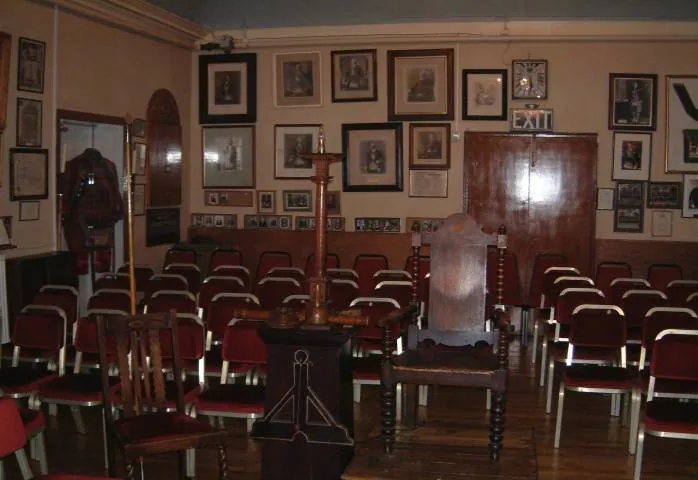
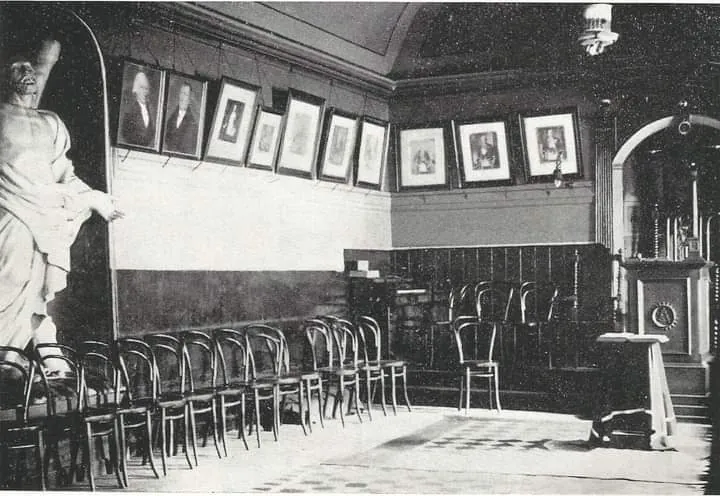
Dalkeith Masonic Lodge is one of the oldest purpose-built lodges in the world. Built in 1766 and consecrated in 1767, its original meeting room survives largely intact and is still used by the Lodge today.
Minute books for the Lodge date back to 1764, when the first plans to erect a lodge were made on the anniversary of St John the Evangelist (27th December 1764). The site was in the garden of Mr Barclay's school, which belonged to a William Hardy, who agreed to feu an area of his garden for 12s 6d per year. The building was consecrated on 24th August 1767, although it was finished the year before.
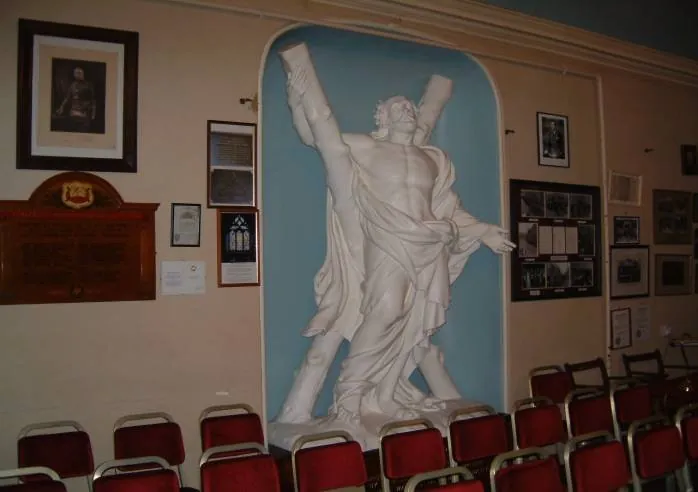
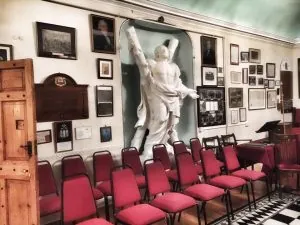
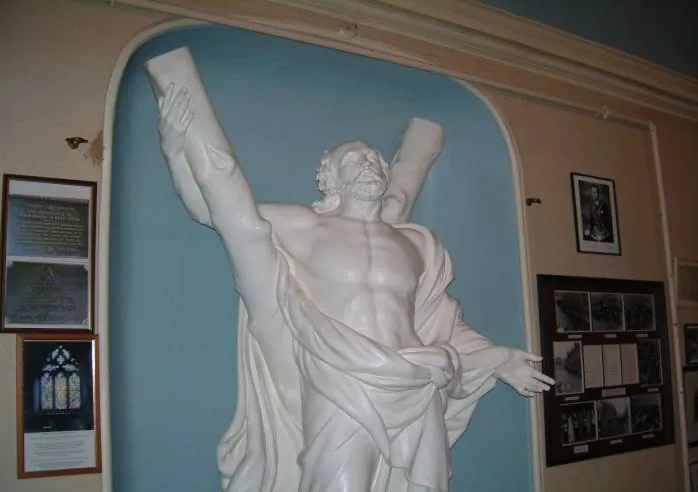
The Lodge has been substantially extended since. The wooden statue of St Andrew in the meeting room is by Sir John Steell (b. 1804), Sculptor to Queen Victoria from 1838. It originally stood at the door of the North British Fire and Life Insurance Company in Princes Street, at Hanover Street, which was burned down; the statue was later gifted to the Lodge by Sir James Walker Drummond.
J. F. Millar (Country Life, 18 May 2000) points out that, until recently, St John's Lodge in Newport, Rhode Island, built in 1759 by Peter Harrison (but not consecrated until 1803), predated the Dalkeith lodge. It has since been sold to be converted into a house, leaving Dalkeith to hold the title.
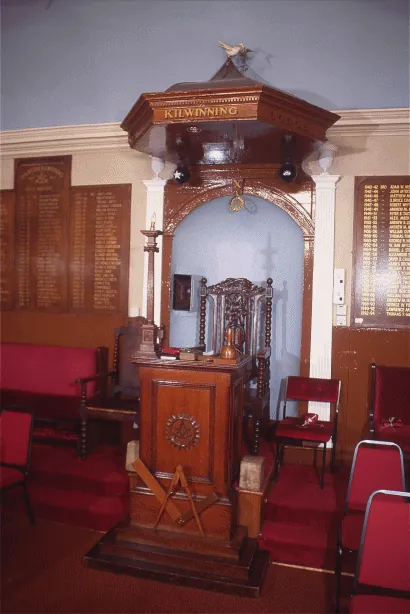
The Master's canopy
It was during the eighteenth century that lodges began to acquire possessions. In the 1700s very few met regularly in their own premises; most meetings took place in the back room of an inn, using the furniture available. By 1800 a considerable number of lodges rented permanent premises furnished exclusively for lodge use.
From the early eighteenth century until the end of the Napoleonic wars several distinct kinds of Masonic lodge can be described. Among them was the ‘new private society’, whose membership of urbane gentlemen, entrepreneurs becoming gentlemen and artisans becoming entrepreneurs came together to discuss enlightened religion, politics and business, as well as to eat, drink and be merry. Many large punch bowls bearing Masonic emblems survive from the eighteenth century, and food and drink were consumed within the lodge room following any ritual business.
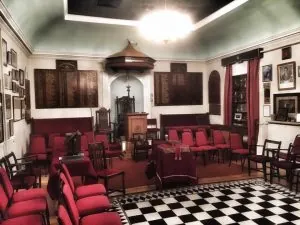
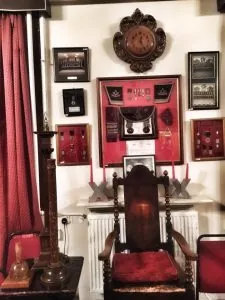
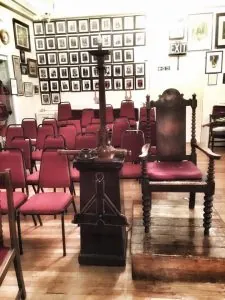
While the chairs used by Dalkeith Lodge, like their accompanying pedestals, are plain and rudimentary in construction, the Master of the Lodge had the distinction of sitting beneath a canopy. The hexagonal Dalkeith canopy (1764) resembles a pulpit sounding board and at some time supported a tester or curtain. At the apex of the pointed roof is a representation of the dove sent by Noah with a branch in its beak, an emblem of good fortune and probably a later addition. The words DALKEITH KILWINNING LODGE in gold paint are also later, as are the spherical lamps. Behind, the wall is hollowed out as a niche, and on either side are plaster pilasters surmounted by urns. The ensemble is neo-classical and was probably modelled on a church pulpit.
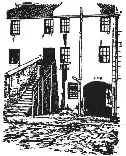
The Old High School Close
Dalkeith sits smilin' on the rig.
Sweet slopin' banks to ilka brig:
A toun like it, say clean an' trig.
There's hardly ony:
Ye'll nae dout see them thats as big.
But nae sae bonny.
Historic Scotland listing
The building was listed on 12th October 2000 (Item 79A, Category B, 129 High Street). The listing reads:
Lodge Dalkeith Kilwinning No 10 (Masonic Lodge). Map ref NT 3325 6751. Currie, Scott & Young, 1766; substantial additions 1939.
Single storey, 4-bay, rectangular-plan lodge. Sandstone rubble, harled in places, polished raised margins.
SE (entrance) elevation: obscured by harled, flat-roofed 1939 additions. NE elevation: not seen 2000. NW elevation: obscured to left by harled addition; window to flanking bay to left, infilled with brick. SW elevation: harled; doorway to bay to left, with sandstone infill; 3 regularly placed window openings to right, all with harled infills; piend-roofed addition to outer right. Window openings to lodge predominantly infilled. Piended graded grey slate roof with lead ridges and inset louvered ventilators. PVCu and cast iron rainwater goods.
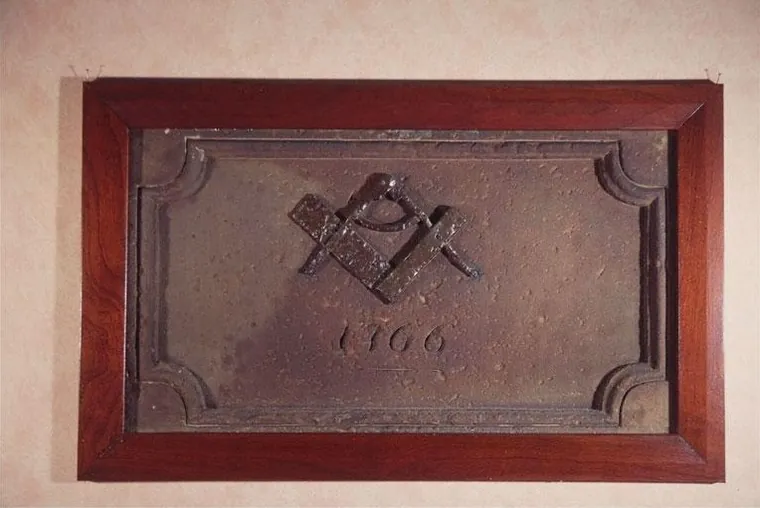
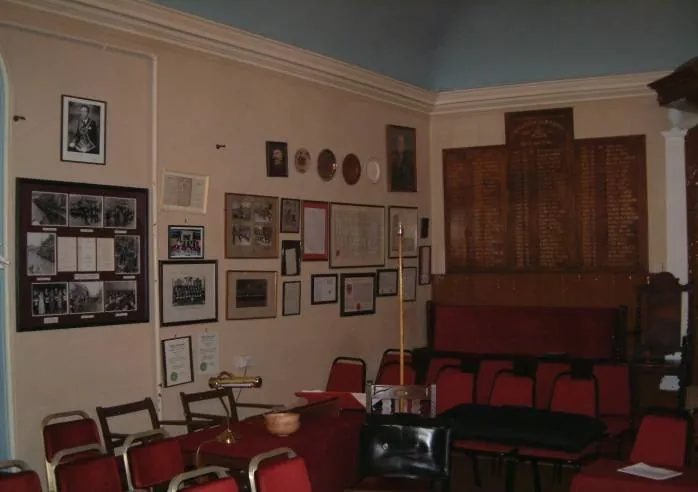
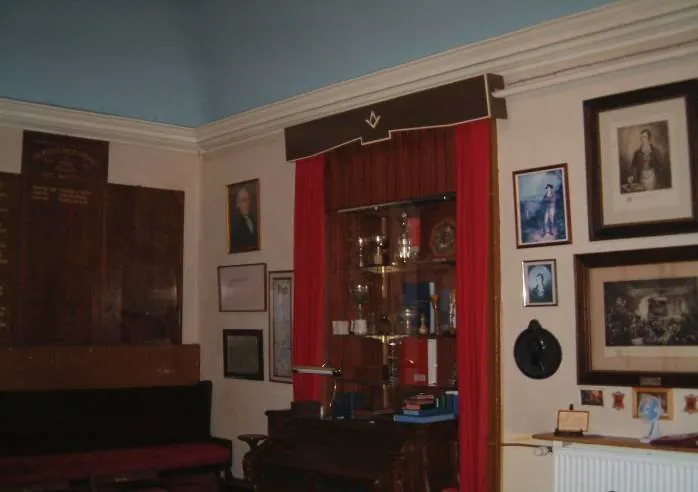
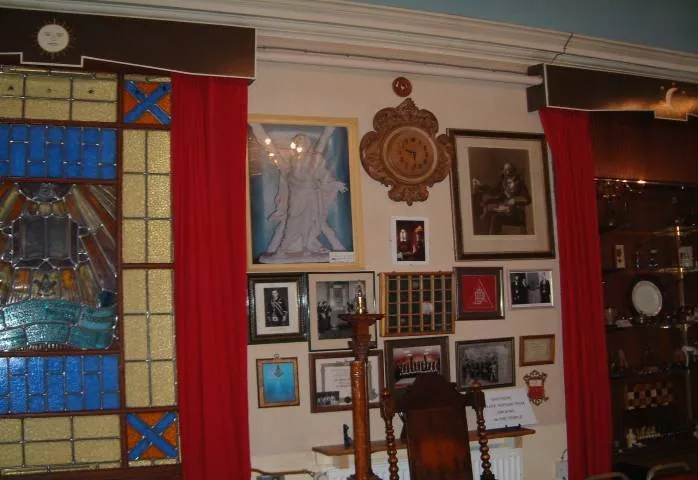
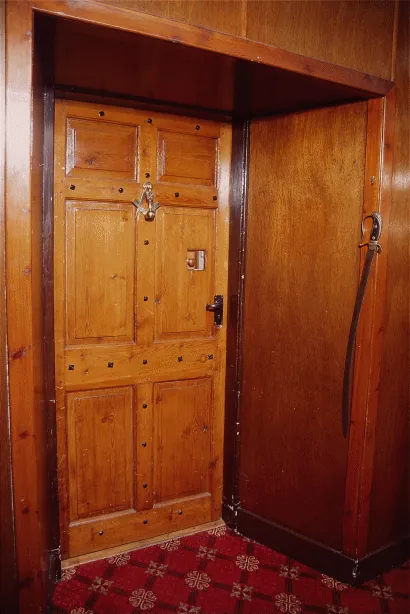
Interior: rectangular-plan principal room; boarded floor covers original flooring; panelled timber door NE side, flanked to left by small round-arched recess (supposedly to bottomless pit); depressed-arched niche flanking doorway to right housing statue of St Andrew by Sir John Steell, 1827. Stained glass memorial window opposite; segmental-arched niche to SE, with hexagonal sounding board oversailing; coombed ceiling with plaster cornices. Datestone from lodge reading “1766” set in wall of 1939 addition.
References: J. Leslie, Plan of Dalkeith, 1770; J. Wood, Plan of Dalkeith, 1822; 1st (1853) and 2nd (1893) edition OS maps; Lodge Dalkeith Kilwinning No 10: A Brief History; J. Fitzhugh Millar, “Lodging a correction”, Country Life, 18 May 2000.